Views: 0 Author: Site Editor Publish Time: 2025-12-08 Origin: Site
When it comes to selecting a boat for passenger transportation, one of the most critical factors to consider is the seating capacity. For businesses looking to offer short-range ferry services, sightseeing tours, or private charters, understanding how many passengers a 10-meter passenger boat can comfortably accommodate is key to choosing the right vessel. A well-chosen boat ensures that operations run smoothly, meets safety requirements, and most importantly, fits the needs of both the operator and the customers. In this article, we will explore the various factors that determine the seating capacity of a 10m passenger boat, its typical capacity range, and how to choose the right boat for your business.
A 10m Passenger Boat refers to a vessel that is approximately 10 meters (or about 33 feet) in length, primarily designed for carrying passengers across water. This size is quite versatile, making it a popular choice for various commercial applications, including ferry services, tourist cruises, and leisure activities.
Typically, a 10m passenger boat has a beam (width) of around 2.5 meters to 3.5 meters, and the number of passengers it can carry varies depending on the design, intended use, and layout. While some boats of this size are designed to carry fewer passengers for comfort, others are optimized for high-capacity transport.
When compared to smaller boats, like those in the 8m range, and larger ones in the 12m or 15m range, a 10m passenger boat strikes a perfect balance between manageable size and sufficient capacity. Larger boats may be more expensive to maintain and operate, while smaller boats might not offer enough capacity for certain operations. As such, the 10-meter range becomes the sweet spot for many boat operators.
The hull dimensions of a 10m passenger boat are crucial in determining its passenger capacity. Length, width (beam), and draft (the boat’s vertical distance between the waterline and the bottom of the hull) all play vital roles in ensuring a stable and efficient design.
For instance, the beam of the boat impacts how wide the boat can be, allowing for more space and comfort for passengers. However, if the beam is too wide, it might affect the boat’s maneuverability. Similarly, the draft is important because a deeper draft can impact the boat's performance in shallow waters. The overall design of the hull will directly influence the stability, capacity, and overall comfort of the passengers on board.
Research indicates that boats with hulls designed to handle specific types of seas, such as those built for calm waters or rougher conditions, will have different capacity specifications. For instance, a 10m boat built for use in shallow waters may have different design considerations than one meant for rough seas.
The stability of a passenger boat is another crucial factor in determining how many passengers it can carry safely. Boats are subject to strict safety regulations, especially when it comes to weight distribution, escape routes, and emergency equipment. These regulations, which are often governed by national and international maritime safety standards, directly influence the design of the boat.
A 10m passenger boat can typically carry between 12 to 20 passengers, depending on its layout and safety features. However, the weight distribution within the boat must be carefully calculated to ensure balance and prevent capsizing. Furthermore, safety measures such as escape routes, life vests, and other emergency systems are essential for ensuring the boat meets the necessary standards for passenger transportation.
The intended use of the 10m Passenger Boat—whether for ferry services, sightseeing tours, or leisure activities—also affects its seating capacity. For example, boats used for ferry services, where passengers need to board and disembark quickly, may have simpler seating arrangements with minimal facilities. On the other hand, boats used for tourist excursions or private charters may feature luxurious seating, more open spaces, and additional amenities such as a small galley or storage areas.
The layout of the boat can include features like folding seats, bench seating, and adjustable configurations to optimize space and comfort. For instance, a boat designed for private charters might have fewer seats but more room for movement and storage, while a ferry boat might prioritize maximizing the number of seats to accommodate as many passengers as possible.
Depending on the country in which the boat is being used, different certifications and regulations will apply to the boat’s seating capacity. In some regions, passenger boats must adhere to specific safety standards, including the number of life jackets available, the number of passengers per square meter, and the boat’s overall weight tolerance. These rules can impact the maximum number of passengers a 10m boat can legally carry.
For instance, if a 10m passenger boat is used for public ferry services, it may be required to undergo certification by maritime authorities to ensure that it meets all necessary safety and operational standards. These rules can vary from country to country, so it's essential for boat operators to research and comply with local regulations when purchasing and operating a 10m passenger boat.
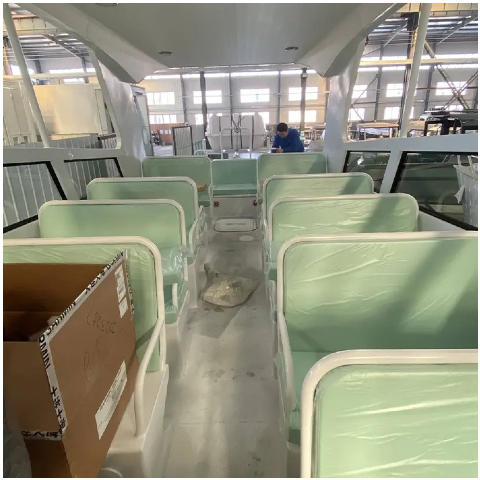
When evaluating a 10m Passenger Boat, the seating capacity typically ranges from 12 to 20 passengers. This range can vary depending on the boat’s design, layout, and intended use. For example, some 10m boats are built with a seating configuration that allows for 12 passengers, ensuring plenty of space and comfort. Others, particularly those used for tourist operations, may accommodate 20 passengers or more.
For comparison, a similar boat design in the 12m range could potentially carry up to 30 passengers, but the trade-off may include a larger footprint, higher operational costs, and the need for a larger docking area. Thus, the 10-meter boat remains an ideal option for small-to-medium-scale ferry services and tour operators, offering a good balance between capacity and operational efficiency.
When selecting a 10m Passenger Boat for your business, it’s important to assess your target market and understand your operational requirements. Here are a few steps to help guide your decision:
Assess Your Target Market: Are you primarily offering ferry services, or are you focusing on providing scenic tours? Consider the type of passengers you will be serving, as this will influence your boat's capacity needs.
Match Boat Layout to Passenger Flow: Ensure that the boat's design allows for easy boarding and disembarking, especially during peak times. Boats with well-designed layouts that consider passenger flow are critical for ensuring smooth operations.
Consider Future Scalability: If your business grows and the demand for passenger capacity increases, will the 10m boat still meet your needs? Consider the potential for future scalability in terms of adding additional boats or upgrading to larger vessels if necessary.
Safety Features: Ensure that the boat adheres to safety standards for the number of passengers it will carry. This includes providing the necessary life-saving equipment, sufficient space for each passenger, and compliance with all safety regulations.
Choosing the right 10m Passenger Boat for your business requires careful consideration of several factors, including the boat’s size, layout, stability, and safety standards. With the ability to accommodate 12 to 20 passengers, this type of boat is an excellent option for small-to-medium-scale ferry services, sightseeing tours, and private charters. By understanding the factors that influence passenger capacity, boat operators can make an informed decision that will optimize their operations and ensure the safety and comfort of their passengers.
For more information on our range of 10m Passenger Boats and how they can meet your business needs, please don’t hesitate to contact us.
1. What is the maximum seating capacity of a 10m passenger boat?
The typical seating capacity of a 10m passenger boat ranges from 12 to 20 passengers, depending on its layout and design.
2. How do I determine the best passenger boat for my ferry service?
Consider your target market, the type of service you are providing (tourism, ferry, private charter), and the boat’s layout to determine the ideal capacity.
3. Is a 10m passenger boat suitable for rough seas?
Yes, many 10m passenger boats are designed to handle varying water conditions, though you must ensure that the boat’s hull and design are appropriate for the specific conditions of your operating area.
4. Can I customize the layout of my 10m passenger boat?
Yes, many manufacturers offer customizable designs that can be tailored to your specific requirements, including seating arrangements, storage, and amenities.


