Views: 0 Author: Site Editor Publish Time: 2026-07-01 Origin: Site
Commercial operators, municipalities, and maritime procurement teams face an intense challenge today. Procuring a modern vessel represents a high-stakes capital expenditure. You must balance operational efficiency, regulatory compliance, and passenger satisfaction perfectly. A poorly specified vessel drains your budget quickly. However, a properly designed boat maximizes daily ridership. It also minimizes unexpected maintenance downtime. Success depends entirely on understanding your specific route parameters. You cannot simply pick a hull from a generic catalog. You need a vessel tailored to your exact operational profile.
This guide breaks down critical technical and commercial evaluation criteria. We help you navigate the complex procurement process smoothly. You will learn how to evaluate capacity requirements accurately. We explain how to select the optimal hull type. We also explore why specific materials perform better over time. Finally, we cover deck layout strategies and compliance standards. This information helps buyers transition confidently. You will move from initial project feasibility to final shipyard shortlisting without unnecessary stress. A well-planned Passenger Ferry Boat project guarantees long-term operational success.
Route Dictates Design: Sea state, wake restrictions, and route duration must drive the baseline specifications before selecting a hull form.
Catamarans vs. Monohulls: Catamaran passenger boats offer superior stability and efficiency for higher capacities, while monohulls remain cost-effective for shorter, lower-capacity routes.
Material Selection Matters: An aluminum passenger boat yields significant lifecycle savings through fuel efficiency and corrosion resistance compared to steel or heavy fiberglass.
Layout Drives Profitability: Turnaround time at the dock (boarding/disembarking) and crew operational efficiency are directly tied to deck layout and ADA-compliant accessibility.
You must establish a strict operational profile first. The specific body of water acts as your non-negotiable starting point. Water depth, fetch, and wave period dictate everything else. You cannot ignore these environmental factors. Fetch refers to the distance wind travels over open water. Long fetch areas produce significant wave heights. You need vessels capable of handling these specific wave periods safely. Shallow depths require entirely different propulsion systems.
Capacity planning requires careful analysis. You must avoid the dreaded "ghost ship" scenario. Over-specifying capacity leads to operating empty seats at a massive loss. Running a half-empty vessel ruins profit margins. Instead, calculate your peak-season versus off-season scalable requirements. You might benefit more from operating two smaller vessels. This approach offers flexibility during slower winter months. It keeps your operational expenses proportional to actual passenger demand.
Route distance dictates speed and comfort requirements deeply. We evaluate these profiles in two distinct categories:
Short-hop and River Crossings: These routes demand rapid acceleration. They require extreme maneuverability. Captains focus heavily on rapid docking procedures. High top-end speed matters less here.
Coastal and Extended Routes: These journeys prioritize sustained cruising speed. You need larger fuel capacities. Passenger comfort systems become critical. You must include robust HVAC systems and active stabilizing technology.
Do not forget local environmental and infrastructure constraints. Shallow drafts restrict certain propeller designs. Local no-wake zones impact your schedule directly. You must factor in existing dock heights. The vessel's fendering system must align perfectly with your current terminals.
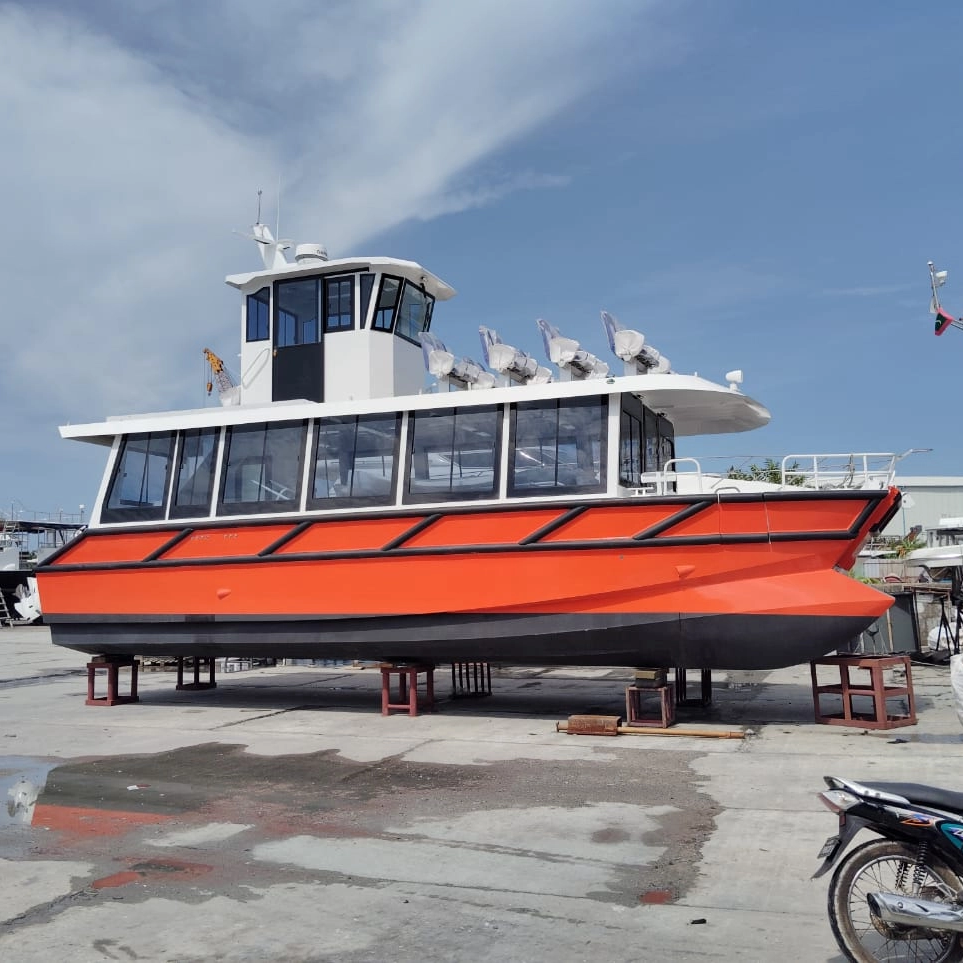
Naval architecture offers two primary hull forms for commercial operators. You must choose between monohulls and multi-hulls carefully. A Catamaran Passenger Boat dominates modern commercial ferry procurement today. These designs provide a significantly broader beam. This wider footprint allows higher passenger density. Amazingly, it achieves this without increasing the draft.
Catamarans also generate reduced wake profiles. This feature proves critical for inland waterways. Lower wake energy protects sensitive shorelines. It also prevents damage to moored vessels nearby. Furthermore, catamarans offer superior roll stability. Passengers experience less motion sickness in choppy conditions. The twin-hull design creates a highly stable platform.
However, traditional monohulls remain highly viable in specific situations. They fit perfectly into narrow docking footprints. Older municipal docks often lack the width for wide catamarans. Monohulls also handle specific heavy-sea conditions exceptionally well. They carve through steep, short-period waves efficiently. Additionally, they present lower initial capital constraints. A single hull generally requires less material and labor to build.
You must align your hull choice with water depth and propulsion systems. Shallow or debris-heavy routes favor waterjets. Waterjets sit flush inside the hull structure. They avoid striking submerged logs or rocks. Conversely, deep-water routes often utilize traditional fixed-pitch propellers. Propellers offer excellent low-speed maneuvering. They also provide strong bollard pull during docking procedures.
Hull Design Comparison
Feature | Monohull | Catamaran |
|---|---|---|
Passenger Density | Moderate | High |
Draft Requirements | Generally deeper | Shallower for equivalent capacity |
Wake Generation | Higher | Lower |
Roll Stability | Standard | Superior |
Initial Build Cost | Lower | Higher |
Material selection defines the vessel's future performance. The industry standard leans heavily toward marine-grade aluminum. Alloys like 5083 and 5086 offer incredible weight-to-strength ratios. The lighter displacement of an Aluminum Passenger Boat translates directly into operational advantages. A lighter boat requires significantly smaller engines. Smaller engines consume less fuel daily. This weight advantage creates massive financial savings over a thirty-year lifespan.
Lifecycle maintenance improves drastically with aluminum. This material offers exceptional resistance to marine corrosion. It forms an oxidized layer instantly when exposed to air. This layer protects the underlying metal naturally. You eliminate the constant gel-coat maintenance associated with fiberglass. Structural repairs become much easier. Shipyards simply cut out damaged sections and weld in new plates.
Let us contrast this against alternative materials. Fiberglass requires heavy molds. This drives up costs for custom designs. Fiberglass also adds unnecessary weight to large commercial vessels. It can suffer from osmotic blistering over time. Steel provides immense strength but brings massive weight penalties. Steel rusts aggressively in saltwater environments. It requires constant chipping, priming, and painting. This regular maintenance takes your vessel out of service frequently.
Finally, consider the end-of-life value. Aluminum retains a remarkably high recycling value. When you eventually retire the vessel, the raw material holds intrinsic worth. Furthermore, commercial aluminum vessels enjoy strong secondary market demand. Used aluminum ferries command excellent resale prices globally.
Deck layout dictates your daily profitability directly. Turnaround time at the dock defines your schedule efficiency. You must design boarding gates carefully. Aisle widths must accommodate fast passenger flow. Wide aisles minimize dock idle time. You want passengers embarking and disembarking seamlessly.
Evaluate your route infrastructure first. Some routes utilize symmetrical docking. The vessel can tie up on either port or starboard sides. Other terminals force asymmetrical boarding layouts. You must configure your deck plan to match your specific terminal limitations perfectly.
Your target demographic shapes the internal configuration. A commuter Passenger Boat requires specific amenities. You must focus on durable, easy-to-clean seating. High-density layouts maximize peak-hour ticket sales. Modern commuters expect robust Wi-Fi access. You must provide ample storage for bicycles and electric scooters.
Conversely, sightseeing or tourism configurations demand different priorities. Tourists want panoramic windows. They prefer open-air upper decks for photography. You need high-quality PA systems for tour guides. You should also integrate onboard revenue generators. Snack kiosks and beverage bars increase your average revenue per passenger significantly.
Crew ergonomics guarantee safe operations. Helm visibility stands paramount. The captain needs 360-degree sightlines. They must see the boarding gates clearly from the command chair. Engine room accessibility matters daily. Your engineering crew needs adequate space for routine checks. Strategic placement of liferafts saves critical seconds during emergencies. You must design safety gear deployments logically.
Navigating classification remains an absolute necessity. You face massive risks if you buy uncertified vessels. Retrofitting non-compliant boats usually results in financial disaster. Local maritime authorities enforce strict standards. In the United States, you build to USCG Subchapter T or K rules. European operators follow CE directives. Larger international vessels adhere strictly to IACS class rules.
Best practices dictate engaging compliance experts early. Do not wait until construction begins. Submit your naval architecture plans to regulatory bodies first. They will review structural fire protection rules. They check stability calculations meticulously. Approval takes time, but it guarantees operational legality.
Accessibility standards demand equal attention. You must incorporate ADA compliance into the initial design phase. Design wheelchair-accessible ramps from day one. Ensure your restroom doorways meet width requirements. Plan accessible seating arrangements near the main entrances. Adding these features post-build requires expensive structural modifications. Planning them early costs very little.
Common mistakes include ignoring local emission mandates. Many ports now require Tier III engine certifications. Others mandate hybrid-ready engine rooms. You must research the environmental regulations for your specific operating basin. Compliance ensures you avoid hefty fines and operational bans.
You cannot hand your project to just any builder. Vetting shipyards requires extreme diligence. Evaluate a commercial boat builder's financial stability first. A bankrupt shipyard will trap your deposit. Request proof of bonding capability. Review their warranty terms thoroughly. You want builders who guarantee their structural welding for multiple years.
Track records matter immensely. Ask for references from current operators. Has the shipyard built your specific hull type before? Do not hire a steel barge builder to construct a high-speed aluminum catamaran. Experience with your chosen material prevents costly fabrication errors.
Prepare a robust Statement of Requirements (SOR). You need this document to get an accurate quote. An effective SOR includes:
Target Cruising Speed: State the speed required fully loaded.
Payload Capacity: List exact passenger numbers and luggage weight.
Route Conditions: Describe wave heights and docking infrastructure.
Preferred Propulsion: Specify jets, props, and preferred engine brands.
Classification Standard: State the exact regulatory body rules required.
Finally, decide between new custom builds and stock designs. A fully custom naval architecture project takes longer. It requires extensive engineering hours. However, it delivers exactly what you need. Modifying a builder's proven stock hull design saves time. It reduces engineering costs significantly. Builders know their stock designs intimately. They can usually estimate delivery timelines much more accurately.
Procuring the right passenger vessel demands a disciplined, analytical approach. You must prioritize route constraints and lifecycle durability over mere aesthetic preferences. Understanding your specific environment ensures you select the correct hull form. Utilizing materials like marine-grade aluminum guarantees long-term efficiency. Planning your deck layout carefully maximizes daily revenue and crew safety.
We recommend finalizing your complete operational profile immediately. Document your route distances, sea states, and capacity demands clearly. Do this before approaching any naval architects or shipyards for quotes. A well-prepared buyer secures better pricing and avoids critical design mistakes. Take the time to build a comprehensive Statement of Requirements today.
A: A well-maintained commercial aluminum vessel typically operates for 20 to 30 years or more. Aluminum resists marine corrosion exceptionally well. Operators can extend this lifespan even further by maintaining proper cathodic protection systems. Regular refits and timely engine replacements keep the vessel highly reliable throughout its service life.
A: Catamarans provide superior roll stability, which drastically reduces passenger motion sickness in coastal swells. They also offer excellent fuel efficiency at higher cruising speeds due to their slender twin hulls. Furthermore, the wide beam allows for spacious deck layouts, increasing passenger capacity without requiring a deeper draft.
A: Construction typically requires anywhere from 9 to 18 months. This timeline depends heavily on current shipyard capacity and the vessel's overall size. Custom naval architecture and engineering add several months upfront. Securing mandatory classification approvals from regulatory bodies also impacts the final delivery schedule significantly.
A: You must model fuel consumption based on your daily route schedule. Calculate crew wages according to the specific tonnage and class requirements. Factor in annual insurance premiums and monthly slip or dockage fees. Finally, establish strict financial reserves for scheduled engine overhauls and routine dry-dock maintenance.


