Views: 0 Author: Site Editor Publish Time: 2026-09-01 Origin: Site
Commissioning a new vessel requires massive capital expenditure. The operational stakes remain incredibly high. Municipalities and fleet operators face immense pressure during procurement. You cannot afford basic design mistakes. Poor planning causes severe regulatory delays. Tourism-focused vessels require luxurious, slow-paced environments. Commuter transit demands high-speed, rapid turnaround cycles. These operational requirements conflict directly. A design suited for sightseeing fails miserably for daily commuting. Fleet operators must navigate these distinct priorities carefully.
This article provides a structured procurement framework. You will learn how to align operational goals before cutting metal. We outline specific strategies to ensure regulatory compliance early. You will also discover how to mitigate common shipyard risks. This guide helps you maximize fleet reliability. We aim to protect your investment from contract signing to final sea trials. By standardizing your technical specifications, you gain total control over the build process of your passenger ferry boat.
Operational Alignment: Customizing a passenger ferry boat requires defining the primary route parameters (wake restrictions, tidal shifts, turnaround times) before specifying vessel capacity.
Hull & Propulsion Realities: Catamaran hulls and hybrid/electric propulsion systems offer long-term savings but require higher upfront CAPEX and shoreside infrastructure assessments.
Compliance First: Design specifications must be driven by local maritime authorities (e.g., USCG, IACS) to avoid costly retrofits during the build phase.
Vendor Vetting: Selecting a builder for a commercial passenger boat hinges on their track record with your specific vessel classification and hull material.
Operators must frame their business problem correctly from day one. You achieve this by separating the operational profiles of different service types. A vessel built for every purpose ultimately excels at none. You must establish firm boundaries around your primary mission profile.
Success criteria for sightseeing vessels differ vastly from commuter transit. Your primary goals include extending passenger dwell time and maximizing panoramic visibility. Premium amenities drive secondary revenue streams. You need lower cruising speeds to minimize noise and vibration. When designing a passenger boat for tourism, focus heavily on revenue-generating square footage. This includes dedicated bar spaces, expansive open decks, and VIP seating areas. Your layout should encourage passengers to move freely around the vessel. Large windows and tiered seating ensure uninterrupted sightlines.
Commuter transit operates under a completely different paradigm. Success relies on high-frequency cycles and rigid schedules. You need rapid embarkation and disembarkation to shorten turnaround times. All-weather reliability keeps the schedule intact during harsh conditions. Low wake footprints remain critical for inland waterways. A modern water taxi demands high seating density. You must select durable, low-maintenance interior materials. Commuters prioritize a fast, predictable, and clean ride over luxury amenities. Every design choice must support getting passengers on and off the boat swiftly.
Target Passenger Capacity vs. Route Frequency Matrix
Service Type | Route Frequency | Target Capacity | Primary Design Metric |
|---|---|---|---|
Tourism / Sightseeing | Low (1-3 trips per day) | 100 - 300+ passengers | Deck space per passenger, visibility |
Commuter Ferry | High (Every 15-30 mins) | 150 - 400+ passengers | Aisle width, boarding gate size |
Water Taxi | On-Demand / Continuous | 12 - 49 passengers | Wake footprint, maneuverability |
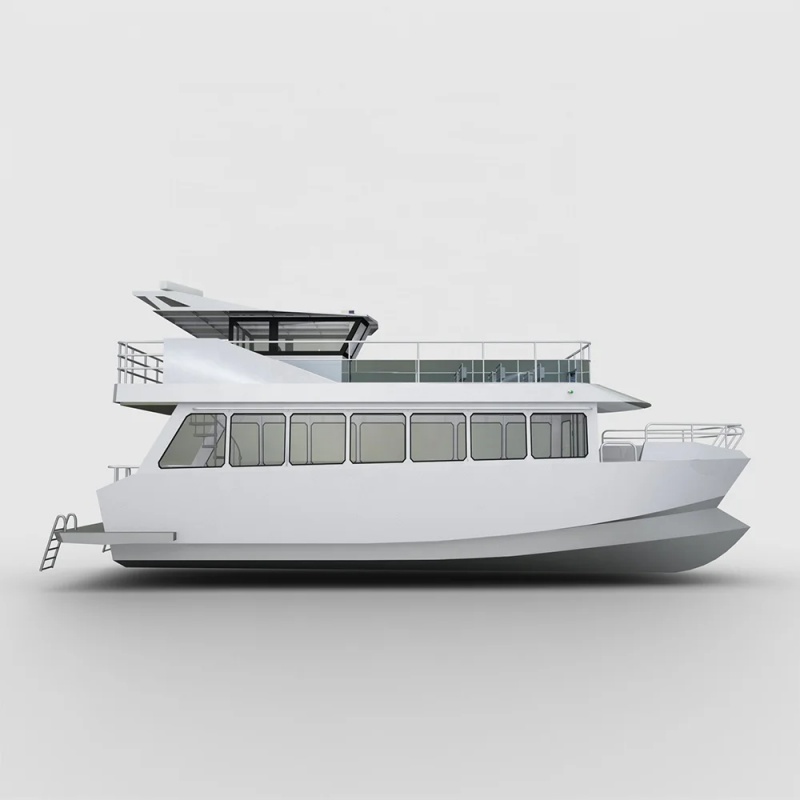
The foundation of any successful build lies in its structural engineering. You must evaluate hull shapes and materials through a strict operational lens. The wrong hull choice restricts future upgrades and limits route flexibility.
Hull geometry dictates vessel stability, speed, and deck space. You must align the hull shape with your capacity targets.
Monohull: These designs prove highly cost-effective for smaller transit operations. They perform exceptionally well in certain rough-water conditions by cutting through waves. However, they limit total deck space. They also tend to roll more at zero speed.
Catamaran: This shape serves as the industry standard for high-capacity commuter ferries. Catamarans offer superior lateral stability. They provide wider beams, which simplifies ADA compliance and wheelchair navigation. They also reduce hydrodynamic drag, enhancing overall propulsion efficiency.
Your choice of construction material impacts vessel draft, maintenance schedules, and propulsion requirements. You must weigh the structural benefits against operational constraints.
Aluminum: This material provides a highly lightweight structure. It ensures a lower draft, making it ideal for shallow waters. Aluminum remains the dominant choice for fast ferries and electric propulsion systems.
Steel: Steel offers unmatched durability for heavy commercial use. It performs exceptionally well in ice-prone areas or regions with heavy debris. However, it incurs a massive weight penalty. This weight requires more engine power to achieve target speeds.
Composite/FRP (Fiberglass Reinforced Plastic): Composites require significantly lower hull maintenance. They resist corrosion entirely. They suit specific tourism applications well. However, they remain complex to repair globally if major structural damage occurs.
Assessing engine and propulsion choices requires a strict regulatory lens. You must balance speed requirements with evolving environmental mandates. A modern commercial passenger boat demands highly reliable, compliant power plants.
Traditional diesel systems remain prevalent, but regulations continue to tighten. Evaluating EPA Tier 4 (or local equivalent) diesel systems is mandatory for long-distance, high-speed routes. These engines require complex exhaust after-treatment systems. You must allocate physical space for diesel exhaust fluid (DEF) tanks. Hybrid-diesel systems bridge the gap for variable operational profiles. They excel when a route combines low-speed harbor tours with high-speed open-water transits. The vessel maneuvers silently on battery power near the dock. It then switches to diesel for high-speed transit, optimizing engine load and reducing emissions in populated areas.
Zero-emission ferries present unique operational dynamics. You must conduct a rigorous risk and reward analysis before committing to battery power. Fully electric systems require strict route predictability. You cannot easily divert an electric ferry to an unplanned distant port. Furthermore, you must ensure the availability of high-megawatt shoreside charging infrastructure. The vessel is only as reliable as its local power grid. You also face distinct maintenance trade-offs. Electric motors require vastly lower mechanical maintenance than diesel blocks. However, you must plan for heavy battery replacement cycles. Battery banks degrade over time and add significant weight to the hull.
You must guide layout customization based on capacity targets and human-centric design. A poor interior layout frustrates passengers and delays schedules. Every seat, aisle, and door must serve a specific operational function.
Your deck plan directly impacts turnaround times. Designing wide aisles prevents passenger bottlenecks. You should implement multi-point boarding gates. Allowing passengers to embark and disembark simultaneously minimizes docking dwell time. You must balance indoor climate-controlled seating with outdoor observation decks. This balance depends entirely on the vessel's primary operating climate. Tropical routes demand massive HVAC capacity and shaded outdoor spaces. Cold-weather routes require robust heating, heated decks to prevent ice, and extensive indoor seating.
Accessibility is a strict legal requirement, not an optional upgrade. Integrating flush thresholds prevents tripping hazards and accommodates mobility devices. You must include dedicated wheelchair tie-downs in prime seating locations. Restroom dimensions must strictly adhere to local disability access codes. You must incorporate these features during the initial design phase. Retrofitting a vessel for accessibility later often breaks the original weight and stability matrix. Widening doors or adding heavy ramps shifts the vessel's center of gravity. This requires new stability tests and can severely delay certification.
Marine construction involves intense legal and safety realities. You must demonstrate expertise regarding maritime law. Failing to meet regulatory standards results in a vessel that cannot legally carry passengers.
You must engage regulatory bodies before the shipyard cuts any metal. Organizations like the American Bureau of Shipping (ABS), Det Norske Veritas (DNV), or local Coast Guards enforce strict rules. They must approve your design drawings completely. You must understand intact and damage stability requirements. Intact stability ensures the vessel will not capsize under normal weather or passenger shifts. Damage stability ensures the vessel remains afloat even if a specific hull compartment floods. Commercial passenger vessels face the most rigorous stability metrics in the maritime industry.
Shipyard builds rarely execute flawlessly without strict oversight. You must factor in current supply chain realities. Specialized propulsion units and custom electronics often carry massive lead times. Order these components months before construction begins. We strongly advise hiring an independent owner's representative or marine surveyor. This professional oversees shipyard quality control on your behalf. They verify weld quality, monitor construction milestones, and ensure the yard follows the approved drawings. They protect your interests when disputes arise on the shop floor.
The procurement stage requires a clear, actionable checklist. You are not just buying a product; you are entering a multi-year partnership. Selecting the right builder for your custom passenger ferry boat determines the project's ultimate success.
Use these evaluation criteria when vetting shipyards:
Portfolio match: Do they have proven hulls currently in the water? The yard must demonstrate experience with your exact use case and chosen hull material.
Financial stability: Assess their bonding capacity. Ensure they accept milestone payment structuring rather than demanding massive upfront deposits.
Post-delivery support: Review their warranty terms carefully. Confirm they provide comprehensive sea trials, intensive crew training, and guaranteed spare parts availability.
Follow these next actions to solicit accurate bids:
Define your exact route parameters, including speed, capacity, and wake restrictions.
Consult with a naval architect to draft a preliminary Statement of Requirements (SOR).
Issue precise Request for Proposals (RFPs) to a shortlist of qualified builders.
Compare the received bids based on technical compliance, not just the lowest initial build cost.
A successful vessel build relies on prioritizing physical route realities and strict regulatory compliance. You must ignore aesthetic assumptions and focus purely on operational data. Whether you need a high-speed commuter vessel or a slow-paced sightseeing platform, the engineering fundamentals remain identical. Define your mission profile early. Choose a hull and propulsion package that supports your specific boarding cycles and environmental mandates. Never compromise on stability requirements or accessibility standards.
We encourage operators to consult immediately with a naval architect or marine procurement specialist. They will help you refine your Statement of Requirements. This professional guidance ensures you solicit accurate bids and avoid disastrous shipyard delays. Take control of your procurement process today to guarantee a reliable, compliant fleet tomorrow.
A: Costs vary drastically. You should estimate pricing based on per-seat capacity, hull material, and propulsion choice. A small aluminum water taxi requires vastly different capital than a 300-passenger hybrid-electric catamaran. Always draft a Statement of Requirements first to get accurate shipyard estimates rather than relying on fixed, generalized numbers.
A: The timeline depends heavily on vessel complexity. Expect 3 to 6 months for initial design and regulatory drawing approval. Construction and final sea trials typically require an additional 9 to 18 months. Supply chain delays for specialized engines can extend this timeline significantly.
A: Conversions are extremely difficult. Retrofitting heavy battery banks into legacy hulls severely alters the vessel's center of gravity. This challenges the original intact stability matrix. Purpose-built electric designs position batteries optimally to maintain balance and performance, making new builds generally safer and more efficient.


