Views: 0 Author: Site Editor Publish Time: 2026-07-08 Origin: Site
Procurement of a commercial vessel represents a high-stakes capital expenditure for any marine operator. Operational misalignment here can severely impact your profitability and passenger safety. You must bridge the gap between initial engineering specifications and tangible business outcomes. Achieving this requires focusing on lifecycle durability, local route conditions, and daily passenger volume constraints.
A successful purchase requires moving past simple aesthetic preferences. You need to evaluate strict regulatory compliance frameworks and ensure long-term hull integrity. This guide breaks down the critical decision matrices for your fleet expansion. We will explore various operational models, marine-grade material choices, and essential compliance standards. You will learn how to mitigate procurement risks and align vessel capacity directly to your specific routes. Following these principles ensures your investment serves your business goals efficiently.
Match the vessel to the route: Wave height, docking infrastructure, and trip frequency must dictate hull design and draft.
Material dictates maintenance: An aluminum passenger boat generally offers superior durability and lower long-term maintenance costs for rigorous daily operations compared to fiberglass.
Compliance is non-negotiable: Local maritime authority classifications determine maximum payload, required safety features, and crew requirements.
Calculate TCO, not just purchase price: Fuel efficiency, insurance premiums, and turnaround times impact profitability more heavily than the initial acquisition cost.
You cannot purchase a reliable vessel without first defining its primary mission. Different service routes impose entirely unique demands on hull design, seating layouts, and turnaround efficiency. We classify these operations into three distinct categories.
Coastal communities and offshore islands rely heavily on durable transit solutions. A dedicated Passenger Ferry Boat serving these routes requires exceptionally high stability. It must handle unpredictable open-water swells and harsh coastal chop safely. Operators focus on maximizing enclosed seating to protect commuters from adverse weather. You also need substantial, secure luggage capacity for residents transporting goods. All-weather reliability stands as the absolute priority for island transport routes.
Tourism vessels prioritize the passenger experience over sheer capacity or speed. These boats require expansive open-deck space and panoramic visibility. Tourists expect low noise levels and minimal engine vibration during their trips. You must also consider your specific operating environment. Coastal sightseeing demands different draft requirements compared to inland river operations. River tours often navigate shallow waters, requiring specialized shallow-draft hull designs.
Urban water transit networks function like municipal subway systems on the water. They demand rapid boarding and disembarking layouts. Wide aisles and multiple entry points minimize dock turnaround time. Congested city waterways also require high maneuverability. Frequent start-stop operations punish standard engines, making fuel efficiency paramount here. You must optimize the deck layout to keep passenger flow moving swiftly.
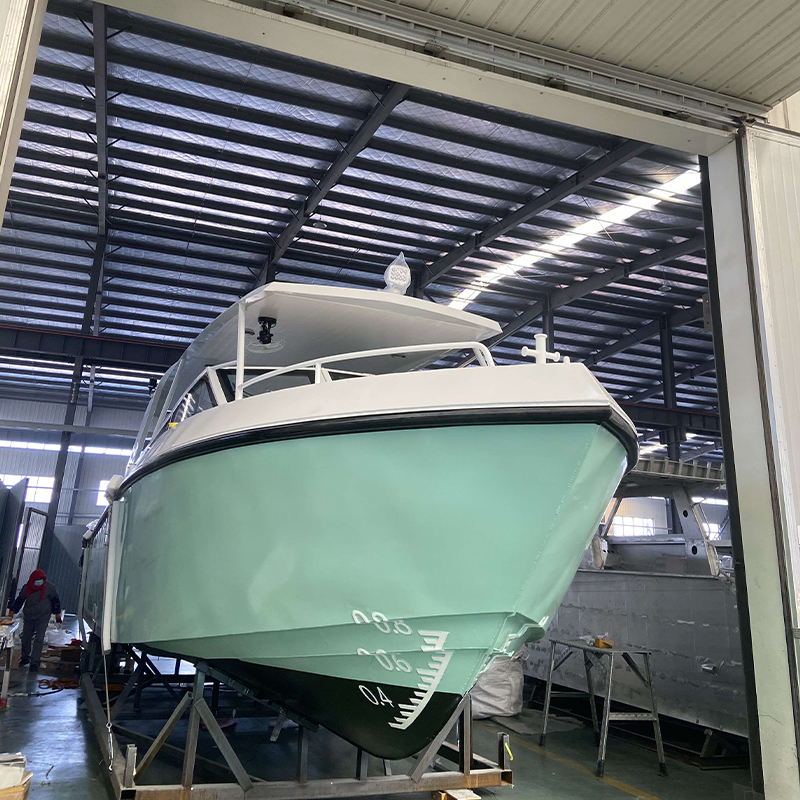
Choosing the right hull material directly impacts your long-term maintenance overhead. Modern operators increasingly prefer metal alloys over traditional composites. An Aluminum Passenger Boat provides several distinct engineering advantages for rigorous daily use.
Marine-grade aluminum dramatically reduces overall vessel weight. This lightweight profile improves fuel economy significantly. Lighter vessels require less horsepower to reach cruising speeds. Importantly, this weight reduction occurs without sacrificing structural integrity. Your fleet burns less fuel daily, expanding your operational margins.
Commercial docks and floating debris pose constant threats to active vessels. Aluminum bends upon heavy impact. It absorbs kinetic energy rather than shattering like fiberglass. This characteristic prevents catastrophic hull breaches. When damage does occur, repairs prove straightforward. Technicians use standard aluminum welding equipment. Conversely, fiberglass repairs require complex curing processes inside climate-controlled environments.
Metal hulls boast remarkable longevity in commercial fleets. Many operate reliably for over three decades. Historical depreciation curves favor aluminum strongly. When you decide to upgrade your fleet, aluminum hulls retain higher resale values compared to aging composite alternatives. Buyers trust the verifiable structural integrity of older metal vessels.
Safety regulations strictly govern commercial marine operations. Aluminum inherently possesses non-combustible properties. It offers a critical baseline safety advantage. A fire aboard a composite vessel can spread rapidly as the resins ignite. Aluminum prevents hull combustion, providing your crew extra time to deploy fire suppression systems.
You must balance multiple engineering trade-offs when selecting a Commercial Passenger Boat. Ignoring these core dimensions often leads to compromised performance or regulatory hurdles.
Scaling up passenger capacity exponentially increases vessel displacement. Heavier boats demand larger engines and burn substantially more fuel. You must determine the exact "sweet spot" for cruising speed. Base this decision entirely on your route schedules. A vessel traveling 25 knots might burn twice the fuel of one traveling 18 knots, saving only five minutes on a short harbor crossing.
Engine selection dictates maintenance schedules and daily operating expenses. We evaluate several primary options below.
Propulsion Type | Primary Advantage | Operational Limitation | Ideal Use Case |
|---|---|---|---|
Outboard Engines | Easy replacement, low initial cost | Higher fuel consumption per HP | Tourism, shallow draft routes |
Inboard Diesels | Maximum torque, supreme longevity | Complex maintenance access | High-capacity island transport |
Hybrid / Electric | Zero emissions, silent operation | Strict charging infrastructure needs | Short urban water bus loops |
You must assess emerging options like electric drives carefully. They offer excellent environmental benefits. However, you must weigh these against the reality of current local charging infrastructure and strict range limitations.
Always match the vessel draft to the shallowest point of your operating route during low tide. Failing this basic check causes costly groundings. You must also evaluate wake performance. Ecologically sensitive zones and urban rivers strictly regulate wake heights. Catamaran hull designs typically offer excellent low-wake performance. They slice through the water rather than plowing water aside.
Passenger comfort ensures repeat business. Incorporate ADA compliance or local accessibility equivalents into the initial design phase. Ramps and wide aisles accommodate wheelchairs easily. You must also plan adequate restroom facilities based on trip duration. Proper climate control requirements remain essential for sustained operations in extreme weather regions.
Best Practice: Always request a computational fluid dynamics (CFD) analysis from the shipyard. It proves hull efficiency and wake generation before construction begins.
Regulatory approval dictates your ability to operate legally. You must navigate a complex web of local and international maritime laws.
Understand the distinct roles governing bodies play. Organizations like the USCG, CE, or Bureau Veritas approve vessel blueprints. They enforce strict engineering codes. Local maritime authorities then issue the final operating licenses. You must align your shipyard's build standards with your specific local authority requirements from day one.
Engineering requirements for intact and damage stability are rigorous. High-capacity transit operations face the strictest scrutiny. Naval architects calculate how the vessel behaves under heavy passenger loads shifting to one side. Damage stability determines if the boat remains afloat after a hull puncture. These calculations protect human life.
Commercial vessels cannot rely on single systems for critical functions. You must evaluate manufacturer integration of redundant systems. Secondary bilge pumps provide backup flooding control. Automated fire suppression systems protect engine compartments. Clear, redundant emergency egress routes ensure rapid passenger evacuation.
Auditors require extensive paperwork before granting operational certificates. Ensure your shipyard provides comprehensive stability books. You will also need detailed structural drawings and raw material certificates. Missing documentation delays commercial registration by months.
Common Mistake: Do not assume a CE-certified vessel automatically passes USCG or AMSA inspections. Always verify local compliance before signing a purchase contract.
Acquiring a new vessel involves significant financial risk. You must account for variables extending far beyond the shipyard's quoted price.
International purchases often carry unexpected financial burdens. You must factor in heavy ocean shipping fees. Import duties and tariffs vary drastically by region. Localized commissioning costs also arise once the Passenger Boat arrives. You must hire local surveyors to certify the final assembly and systems integration.
Shipbuilding involves lengthy production schedules. Delays directly impact your planned launch dates. Structure your payments around specific, verifiable milestones. Require independent progress surveys during the build phase. A surveyor represents your interests on the factory floor. They ensure the builder uses specified materials and follows approved blueprints.
A new vessel must integrate seamlessly into your existing operations. Ensure the purchased boat aligns perfectly with your current dock heights. High freeboards make boarding difficult at low docks. Verify shore power availability matches the boat's electrical systems. Finally, confirm your local maintenance yard possesses adequate lifting capacities. A heavy vessel requires a specialized travel lift for annual inspections.
Transitioning fleet operators to new equipment requires structured training. Modern navigation electronics demand specialized knowledge. New propulsion systems handle differently than legacy engines. Invest in comprehensive onboarding programs. Well-trained crews prevent docking accidents and optimize daily fuel consumption.
Selecting the right commercial vessel demands a rigorous, analytical approach. You must map your operational needs directly to structural engineering choices. Assess hull materials for long-term durability and mandate strict regulatory compliance from the start. Mitigate your acquisition risks by factoring in shipping, infrastructure limits, and detailed production milestones.
Transitioning from initial evaluation to formulating a Request for Proposal (RFP) requires clarity. Detail your exact route parameters, passenger volume goals, and required redundancies in the RFP. This eliminates ambiguity for prospective builders.
We advise prioritizing manufacturers offering transparent sea-trial data. Verify their commercial references thoroughly. Robust post-sale support matters just as much as the initial build quality. Initiate your shortlisting process today by requesting preliminary general arrangement (GA) drawings from qualified shipyards based on your unique route profiles.
A: A well-maintained aluminum vessel easily operates for 20 to 30 years or more. Achieving this lifespan requires strict adherence to maintenance schedules. You must perform regular hull anode replacements to prevent galvanic corrosion. Routine engine refits and interior updates also keep the vessel commercially viable for decades.
A: Yes, but it requires specific compromises. You must incorporate modular seating and semi-open layouts. This versatility impacts specific efficiency metrics. An open layout sacrifices enclosed commuter seating capacity. Conversely, prioritizing commuter density reduces the panoramic viewing space tourists prefer. You must balance these factors carefully.
A: Demand third-party class surveyor reports during the build process. Organizations like Bureau Veritas or ABS inspect the vessel continuously. Never release final payments without these certified reports. Furthermore, insist on a contract clause making final delivery subject to local maritime authority approval in your operating region.
A: Capacity sweet spots depend heavily on local licensing tiers. Frequently, exceeding thresholds like 12 or 49 passengers triggers stricter regulations. These larger capacities require highly certified captains, additional deckhands, and complex safety gear. Staying just below these regulatory thresholds often keeps operating expenses manageable for new startups.


