Views: 0 Author: Site Editor Publish Time: 2026-02-10 Origin: Site
Choosing Patrol Boats is never a matter of simply comparing length, engine power, or top speed. In real operations, the most effective patrol boat is the one that fits its mission profile, operating environment, and deployment rhythm. A vessel designed for port security will face very different demands from one used for search and rescue or water quality monitoring. Poseidon Boat, as a leading aluminium commercial and working boat manufacturer, focuses on building mission-oriented patrol boats that are customized around how they will actually be used, not around abstract specifications or marketing trends.
Selecting the right patrol boat starts with a clear understanding of purpose. No single platform can maximize speed, range, payload, comfort, and cost efficiency at the same time. Every patrol boat is a set of trade-offs, and successful selection depends on knowing which factors matter most for your operation. This structured approach helps decision-makers avoid over-specifying unnecessary features or underestimating critical requirements.
The first step is identifying the primary mission of the patrol boat and ranking any secondary roles. A boat used mainly for port security patrols may occasionally support emergency response, while a rescue-focused vessel might also perform routine monitoring tasks. These missions should be ranked by frequency and importance. The primary mission should drive most design decisions, while secondary missions can be supported through adaptable features rather than major structural compromises.
The operating environment shapes nearly every aspect of patrol boat selection. Coastal waters expose vessels to waves, wind, and changing weather, while ports and harbors emphasize maneuverability and durability due to frequent docking. Inland rivers and lakes often involve shallow water, narrow passages, and debris. Distance from shore, typical sea state, water temperature, and seasonal conditions all affect hull form, propulsion, and onboard systems. Defining where the boat will spend most of its time prevents mismatches between design and reality.
How often the boat is deployed and how long it remains on duty are just as important as where it operates. High-tempo operations with multiple daily deployments demand fast startup, efficient fuel use, and low maintenance downtime. Longer patrols require greater endurance, crew comfort, and reliable systems. Understanding deployment rhythm helps determine fuel capacity, cabin requirements, and maintenance planning.
Bigger patrol boats often promise greater range and payload, but they also come with higher operating costs and reduced maneuverability. For many missions, a compact, well-designed platform offers better efficiency and faster response. Size should be chosen based on crew number, equipment load, and environmental conditions rather than a desire for maximum capacity. An oversized boat may underperform in tight harbors or shallow waterways.
The choice between an enclosed cabin and an open deck has a direct impact on operational effectiveness. Cabins provide protection from weather, reduce crew fatigue, and support longer missions in cold or rough conditions. Open decks maximize working space for boarding, rescue handling, or equipment deployment. Many patrol boats combine both, offering sheltered control areas with open working decks to balance comfort and functionality.
Different missions place different demands on deck space. Search and rescue operations require clear access points and unobstructed areas for recovery. Law enforcement missions may prioritize safe boarding zones and secure storage for equipment. Monitoring and research tasks often need mounting points for instruments and sampling gear. Defining these needs early ensures the deck layout supports daily operations rather than forcing crews to adapt around poor design.
Propulsion selection affects performance, maintenance, and internal space. Outboard engines are popular for patrol boats due to their high power-to-weight ratio, ease of servicing, and simplified replacement. Inboard systems may be preferred when internal protection, weight distribution, or specific handling characteristics are required. The choice should reflect serviceability expectations and the availability of maintenance resources.
In shallow or debris-filled waters, waterjet propulsion can reduce the risk of damage and improve maneuverability. Propeller systems, on the other hand, are efficient and widely supported, making them suitable for many coastal and port operations. The operating environment determines which system delivers safer and more reliable performance.
Top speed figures are often emphasized, but useful speed matters more. Patrol boats should maintain efficient cruising speeds that balance fuel consumption and response capability. Excessive top speed that is rarely used adds cost without improving mission outcomes. Defining realistic speed requirements helps avoid unnecessary compromises in range or payload.
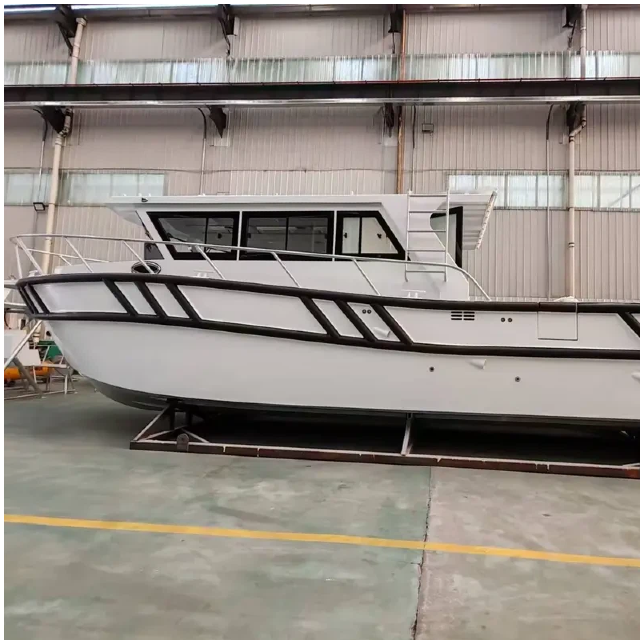
Crew efficiency depends on thoughtful layout decisions. Seating arrangements, handrails, door placement, and storage locations all influence how quickly and safely tasks can be completed. Customization focused on crew workflow reduces fatigue and improves response during critical moments.
Customization is most effective when it supports specific mission modules. Search and rescue kits, surveillance readiness, or sampling system mounts should be integrated into the design rather than added as afterthoughts. This approach ensures equipment is secure, accessible, and does not interfere with other operations.
Modern patrol missions rely heavily on navigation, communication, and monitoring systems. Electrical capacity and wiring design should allow current systems to operate reliably while leaving room for future upgrades. Planning for electronics integration during the design phase avoids costly modifications later.
Requirement | Why It Matters | Recommended Option | Customization Notes |
Crew size | Determines space and seating | Cabin or hybrid layout | Adjustable seating |
Operating range | Affects fuel capacity | Optimized hull efficiency | Optional fuel expansion |
Sea state | Influences hull form | Reinforced aluminium hull | Enhanced stability features |
Boarding frequency | Impacts deck design | Open working deck | Safety rails and access points |
Equipment load | Determines payload needs | Modular deck layout | Custom mounting systems |
This checklist provides a structured way to align requirements with practical specifications, helping decision-makers stay focused on mission needs.
Patrol boats are working assets, and ease of maintenance directly affects availability. Designs that allow easy access to engines, systems, and structural components reduce service time. Aluminium construction supports efficient repairs, keeping boats operational with minimal downtime.
Routine inspections and basic corrosion management extend vessel life. Aluminium patrol boats benefit from inherent corrosion resistance, but proper drainage, material isolation, and inspection practices further enhance durability. These considerations reduce long-term ownership costs.
Clear documentation and acceptance procedures ensure the patrol boat meets operational expectations from day one. Verifying layout, systems, and performance during delivery helps avoid issues during deployment and establishes a reliable baseline for future maintenance.
Poseidon Boat approaches patrol boat projects through a structured configuration process. Requirements are discussed in detail, followed by recommendations on hull size, layout, and systems. Key design elements are confirmed before integration, and vessels undergo testing to ensure they perform as intended. With shipyards in Qingdao, Jinan, and Xinyi, Poseidon builds plate aluminium patrol boats ranging from 8 to 25 meters, serving security, rescue, engineering, and monitoring operations worldwide. Each patrol boat is custom made to client specifications or government contracts, ensuring alignment with real operational needs.
The best patrol boat is not the one with the longest specification list, but the one that matches its mission without compromise. Clear priorities, realistic trade-offs, and thoughtful customization ensure patrol boats perform effectively over their entire service life. Poseidon Boat builds aluminium patrol boats with this philosophy, focusing on reliability, efficiency, and mission alignment. If you are planning a new patrol project, share your mission checklist with us and explore how our customized aluminium patrol craft can support your operations. Contact us to discuss your requirements and discover tailored patrol boat solutions.
What is the first step in choosing patrol boats for professional use?
The first step is defining the primary mission and operating environment, as these factors influence nearly all design and configuration decisions.
Why are customized patrol boats important for real operations?
Customized patrol boats ensure layout, systems, and performance match actual mission needs rather than generic specifications, improving efficiency and safety.
How does aluminium construction affect patrol boat lifecycle costs?
Aluminium construction offers corrosion resistance and easier repair, helping reduce downtime and make long-term maintenance costs more predictable.
Can patrol boats be adapted for multiple missions?
Yes, with proper planning and modular customization, patrol boats can support primary and secondary missions without sacrificing core performance.


