Views: 0 Author: Site Editor Publish Time: 2026-07-15 Origin: Site
Choosing the right hull material goes beyond mere preference. It acts as the primary driver of a commercial fleet's long-term profitability and operational uptime. Both steel and marine-grade aluminum possess proven track records across the commercial marine industry. However, making the wrong choice will permanently inflate either your daily fuel consumption or your annual maintenance budgets. Operators often underestimate how deeply hull material dictates everyday logistics. This guide provides a pragmatic, ROI-focused framework to help you evaluate an Aluminum Passenger Boat against a traditional steel vessel. You will learn how weight, corrosion resistance, and route characteristics influence financial outcomes. We will explore structural advantages, hidden risks, and practical steps to ensure your next fleet addition maximizes revenue while minimizing downtime.
Total Cost of Ownership (TCO): Steel offers a lower initial capital expenditure (CapEx), but an aluminum passenger boat typically delivers lower operating expenses (OpEx) through fuel efficiency and reduced maintenance.
Payload & Draft: Aluminum's superior strength-to-weight ratio allows for higher passenger capacities and shallower drafts compared to a steel passenger ferry boat of the same dimensions.
Maintenance Realities: Steel requires rigorous, continuous rust prevention and coating management; aluminum requires strict electrical system isolation to prevent galvanic corrosion.
Route Suitability: Steel remains the default for heavy-ice or high-debris impact routes, while aluminum dominates high-speed, high-frequency coastal and inland ferry operations.
When you commission a Commercial Passenger Boat, success depends entirely on balancing capital expenses (CapEx) against operating expenses (OpEx). Hull displacement directly dictates your required engine sizing. Heavier hulls demand massive, high-torque engines. These larger powerplants burn significantly more fuel every hour. They also complicate compliance. Local maritime authorities strictly monitor emissions. Meeting modern environmental standards requires efficient, optimized hull designs.
You must view vessel procurement through several specific evaluation lenses. First, weigh your initial budget constraints against long-term fuel pricing projections. Diesel prices fluctuate wildly. A fuel-efficient vessel hedges against future market volatility. Operational fuel costs usually eclipse purchase savings over a vessel's lifespan.
Second, analyze your specific route characteristics carefully. Shallow waters require minimal draft. River debris might necessitate thicker hull plates. Open ocean swells demand excellent structural rigidity. High docking frequency benefits from nimble, lightweight handling.
Third, evaluate your local shipyard infrastructure. You need reliable access to specialized maintenance facilities. Assess the availability of skilled maritime welders in your operational region. An inexpensive vessel becomes an operational nightmare if you cannot maintain it locally.
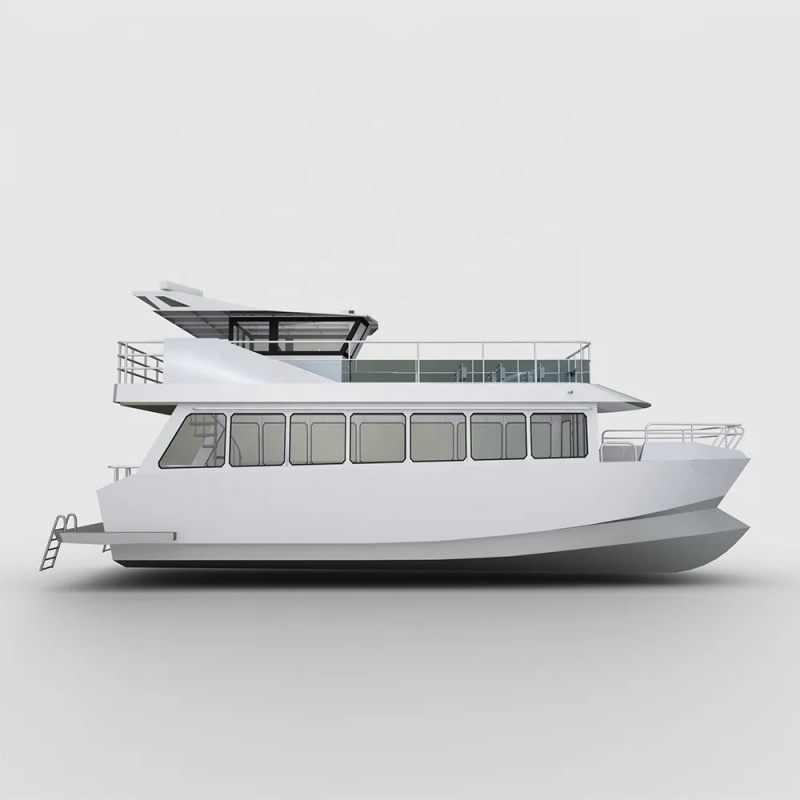
Modern fleet operators increasingly favor marine-grade aluminum. It offers distinct operational advantages designed to maximize everyday efficiency and profitability.
Weight Savings: Marine-grade aluminum remains roughly 30% to 40% lighter than standard maritime steel. This drastic reduction allows your commercial vessel to achieve higher cruising speeds. You can install smaller, more efficient engines while easily maintaining strict schedule reliability.
Corrosion Resistance: High-quality alloys like 5083 and 5086 contain magnesium. They instantly form a natural oxidation layer when exposed to air and water. This microscopic layer protects the hull from severe saltwater degradation. You avoid applying heavy, expensive protective marine coatings.
Payload Maximization: Lighter hulls displace less water naturally. This translates directly to a higher legal passenger limit for a given displacement. You move more paying customers and cargo per scheduled trip.
Building an aluminum vessel requires higher upfront material investments. Specialized fabrication methods also increase initial shipyard costs. Facilities need climate-controlled welding bays. Technicians must use specialized inert gases to prevent weld contamination.
You face a critical need for pristine electrical systems onboard. Poor wiring practices cause electrolysis. This destructive process is also known as galvanic corrosion. Proper electrical isolation is absolutely non-negotiable. You must employ skilled marine electricians during construction and routine maintenance.
Steel remains a traditional favorite for highly specific, demanding environments. It delivers raw strength where fuel efficiency takes a back seat to sheer survival.
Impact Resistance: Steel offers superior tolerance for heavy impacts. It handles floating debris and winter ice exceptionally well. It easily withstands rough berthing conditions in underdeveloped or rural ports.
Initial CapEx: Raw steel material costs stay relatively low globally. You will find standard steel fabrication and repair facilities in almost every commercial port. Finding affordable welders is generally straightforward.
Stability: Heavy displacement contributes significantly to passenger comfort. The sheer mass dampens aggressive wave action. It minimizes severe roll and pitch in heavy open-ocean swells.
The Rust Tax: You must commit to rigorous, continuous maintenance. Crews must constantly chip rust and apply primer. Frequent dry-docking is mandatory. You must maintain structural integrity to pass maritime compliance inspections.
You will suffer higher daily fuel consumption. Increased weight and drag force your engines to work much harder. Every minute of operation burns into your profit margins compared to lighter alternatives.
Comparing materials requires quantifiable, objective metrics. Let us examine how a Passenger Ferry Boat performs across four critical commercial dimensions.
Calculate the exact gallon-per-hour (GPH) burn rate. A lightweight, high-speed vessel often burns 20% to 30% less fuel at equal speeds. Pushing heavy steel through the water requires exponential horsepower increases as speeds rise. This fuel difference dramatically impacts your daily operating budgets and annual profit margins.
Model your annual dry-docking requirements carefully. Steel demands rigorous coating schedules. You must repaint bottoms and topsides frequently. Aluminum requires routine anode replacement and basic hull inspections. Less time sitting in the repair yard means more consecutive days generating ticket revenue.
An aluminum fleet historically holds a substantially higher residual value. These hulls completely avoid deep structural rust over decades. Buyers trust the structural integrity of a well-maintained aluminum frame. Furthermore, the raw scrap value of marine aluminum remains highly lucrative at the end of the vessel's lifecycle.
Both materials meet strict fire and safety regulations globally. Organizations like the United States Coast Guard (USCG) approve both options. Various international classification societies do the same. However, operators must install proper structural fire protection (SFP). Aluminum melts at lower temperatures than steel. Engineers must apply approved insulation layers in engine rooms to ensure passenger safety.
Evaluation Metric | Marine-Grade Aluminum | Traditional Steel |
|---|---|---|
Initial Fabrication Cost | Higher (Specialized welding needed) | Lower (Widely accessible materials) |
Fuel Efficiency | Excellent (30-40% lighter) | Poor (Heavy displacement drag) |
Maintenance Burden | Low (Electrochemical monitoring) | High (Continuous rust prevention) |
Impact Tolerance | Moderate (Prone to denting) | High (Resists puncturing) |
Residual Resale Value | High (No structural rust) | Low to Moderate (Condition dependent) |
Procurement teams often fall victim to common industry myths. Missing these nuances can ruin a fleet deployment. Let us clarify these specific hidden risks.
Many novice operators assume aluminum is entirely maintenance-free. This assumption is dangerous. While highly resistant to saltwater rust, poor wiring destroys these hulls quickly. Mixing dissimilar metals without proper isolation triggers aggressive galvanic corrosion. A dropped copper wire resting in the bilge can eat a hole through the hull. Emphasize the critical need for certified marine electricians.
Do not assume steel is cheaper to run just because local welders are affordable. Frequent patching and painting cause lost operational days. Every day spent in dry-dock is a day without passenger revenue. The cumulative cost of missed sailings often eclipses your upfront shipyard savings within the first five years.
High-horsepower engines generate intense, high-frequency vibrations. These constant vibrations require superior naval engineering in lighter vessels. Aluminum suffers from metal fatigue over millions of flex cycles. Engineers must design proper structural scantlings and robust engine mounts. Without expert design, stress cracking occurs over years of heavy commercial use.
Choosing the ideal Passenger Boat requires a systematic, data-driven approach. Follow these structured steps to align vessel capabilities with your specific commercial needs.
Map your daily operational environments carefully. Your route geography dictates your hull material.
Draft Limitations: Shallow rivers and tidal bays need jet drives and minimal drafts. This heavily favors lightweight hull designs.
Environmental Hazards: Deep fjords, slow-cruising schedules, and heavy-impact routes favor steel. You need mass to push through winter ice.
Operational Frequency: Count your daily dockings. High-frequency turnarounds benefit from nimble, easily maneuverable vessels.
Audit the commercial boat builder’s historical track record. Verify their specific experience with your chosen material. Ask for historical operational data from their existing fleet clients. Ensure they possess modern fabrication equipment, such as CNC routers and precise weld X-ray tools.
Request comprehensive financial projections spanning a 10-year operational cycle. Factor in local fuel costs, engine overhaul schedules, and standard maintenance routines.
Commission an independent naval architect. Ask them to provide preliminary displacement, drag, and speed projections for both materials.
Review your local emission regulations to ensure your required engine sizes remain compliant.
The choice between steel and aluminum ultimately represents a choice between competing operational models. You either accept lower initial capital expenditures alongside heavy, constant maintenance, or you embrace higher upfront costs for superior daily efficiency. Neither material is inherently flawed. They simply serve entirely different commercial strategies.
For modern, forward-thinking fleets, priorities have shifted. Today's operators prioritize fuel efficiency, rapid transit speeds, and maximized daily sailings. Under these operational parameters, the aluminum passenger boat stands out clearly. It represents a mathematically superior, highly reliable long-term investment. Lighter displacement directly drives higher profit margins over decades of service.
You do not have to make this complex decision alone. Contact our marine engineering team or sales department today. We can provide a comprehensive, route-specific hull analysis. Let us deliver a detailed vessel quotation tailored to elevate your operational efficiency.
A: Both materials easily achieve 30 to 50-year lifespans. Their longevity relies entirely on proper, disciplined maintenance. Steel requires constant rust mitigation and frequent repainting to prevent structural thinning. Aluminum resists structural thinning naturally but demands strict electrochemical monitoring to prevent destructive galvanic corrosion.
A: Yes, it is exceptionally safe. Sea-keeping ability remains a direct function of naval architecture rather than raw material choice. Hull shape, beam width, and the center of gravity dictate a vessel's stability. Expertly engineered lightweight vessels handle rough ocean swells beautifully.
A: Fiberglass serves as a distant third option for rigorous commercial use. Heavy molds severely limit customizability for specific operator needs. Furthermore, fiberglass is prone to osmotic blistering over time. It offers significantly lower impact resistance compared to both marine steel and aluminum.
A: Stray electrical current rapidly degrades lightweight metal hulls in saltwater. Sacrificial zinc anodes and isolation transformers protect the vessel actively. They safely redirect destructive electrical currents away from the hull. This prevents galvanic corrosion and preserves your vessel's structural integrity.


