Views: 0 Author: Site Editor Publish Time: 2026-07-29 Origin: Site
Acquiring a commercial vessel represents a calculated operational investment. You are not simply making a standard retail purchase. Every configuration decision impacts your daily workflow and long-term viability. Today, operators face a specific business challenge. You must carefully balance passenger comfort against route profitability. Turnaround efficiency and strict maritime compliance also require constant daily attention.
We designed this guide to help you navigate these complex variables safely. We provide a clear framework for evaluating hull materials, capacity configurations, and lifecycle economics. Commercial operators and resort managers will learn how to align vessel specifications directly to their business outcomes. You will discover practical strategies for maximizing revenue on short routes, daily commutes, and small island transfers.
Optimal Capacity Thresholds: A 20 passenger boat often hits the sweet spot for maximizing revenue while remaining under stricter high-capacity maritime regulatory tiers.
Material Selection Drives TCO: An aluminum passenger boat typically offers lower lifetime maintenance costs and better shallow-water durability compared to fiberglass.
Use-Case Specific Configurations: Interior layouts must be strictly dictated by route duration—commuter routes require different seating density and weather protection than luxury resort transfers.
Compliance Realities: Local regulations (e.g., USCG Subchapter T) dictate safety equipment, stability tests, and minimum crew requirements, fundamentally impacting operational costs.
When you evaluate fleet options, size dictates profitability. A 20 Passenger Boat strikes an excellent operational balance for most short-route businesses. You can achieve consistent load factors without absorbing massive overhead costs.
Labor represents a massive recurring expense for any commercial operator. You must optimize your crew requirements to maintain healthy margins. A 20-person layout often allows you to operate efficiently using just two people. Most local jurisdictions permit a single captain and one deckhand for this specific size category. This streamlined staffing model keeps your payroll manageable. It ensures safety without eroding your daily profits.
Many operators mistakenly buy the largest vessel they can afford. Running two 20-passenger vessels often delivers better dispatch reliability. If one vessel needs unexpected maintenance, you still have an operational asset generating income. Smaller vessels also provide exceptional off-peak efficiency. You can run one boat during quiet morning hours to save fuel. You only deploy the second vessel during peak afternoon demand. This scalable approach easily beats operating a half-empty 40-passenger vessel all day.
Time spent sitting at the dock produces zero revenue. Smaller passenger counts drastically reduce your boarding times. Disembarking happens quickly and smoothly. Fast turnarounds enable higher daily trip frequencies. If you run short routes, adding two extra trips a day transforms your bottom line. Crew members can clean a smaller cabin rapidly between runs. They can also verify tickets and load luggage much faster.
Your specific business model must dictate your vessel's layout. We categorize these configurations based on distinct operational outcomes. You cannot use a one-size-fits-all approach when designing the interior.
High-end guests expect immediate comfort upon arrival. If you operate in places like the Maldives or the Caribbean, aesthetics matter immensely. A specialized Passenger Boat designed for resorts prioritizes premium touches.
You need enclosed, air-conditioned cabins for strict climate control.
Luggage payload capacity requires dedicated, secure spaces away from seating areas.
Smooth seakeeping ensures guests avoid seasickness before their vacation even starts.
Premium upholstery and low interior noise levels reflect your resort's brand standards.
Eco-tourism demands an immersive, rugged experience. Passengers want open-air visibility for sightseeing and photography.
Shallow drafts allow easy beaching and access to small remote docks.
Durable decking withstands heavy, frequent foot traffic from sandy shoes.
Open seating configurations maximize panoramic views.
Bimini tops or hardtops provide essential sun protection without blocking the breeze.
Commuters prioritize speed and reliability over extreme luxury. These routes require highly functional, durable designs built for high cycles.
Strict weather protection keeps daily riders completely dry.
Standardized seating maximizes capacity within a compact footprint.
Low-wake hull designs prevent damage in restricted urban waterways.
Rapid transit speeds shorten the daily commute for your passengers.
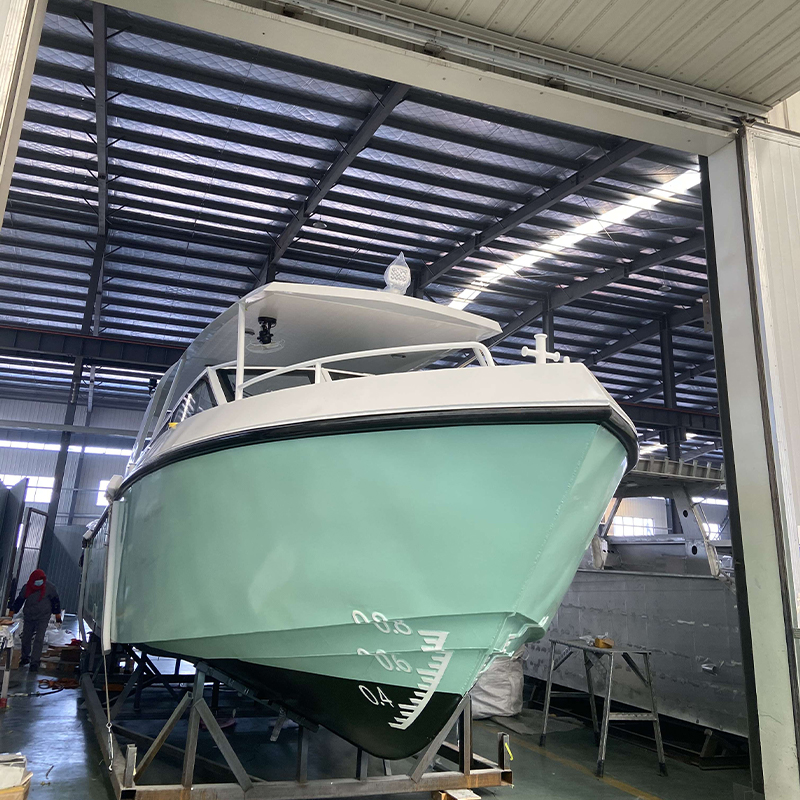
Choosing the right hull material shapes your long-term profitability. You must evaluate structural benefits against upfront pricing. Both materials offer distinct advantages depending on your operating environment.
An Aluminum Passenger Boat brings substantial operational benefits. The metal provides superior strength-to-weight ratios. This lighter overall weight yields noticeably better fuel efficiency during daily operations. Aluminum also offers excellent impact resistance. If you dock frequently in rough conditions, this durability proves invaluable. The hull tends to dent rather than shatter upon impact. Shipyards can easily perform localized hull repairs by cutting and welding new plates.
However, you must carefully consider the trade-offs. Aluminum usually demands a higher upfront investment. Operators must also manage galvanic corrosion aggressively. You need strict maintenance protocols in place. You must properly install and monitor zinc anodes regularly. You also need specialized bottom paints to protect the metal.
Fiberglass offers distinct aesthetic appeals. Many high-end resorts prefer its smooth, molded appearance. Builders use standardized molds, which can lower the upfront production costs for fleet purchases. The flowing lines of fiberglass hide structural joints beautifully.
The primary trade-off involves operational weight. Fiberglass features a heavier displacement. This extra weight increases your daily fuel consumption. Structural hull repairs often require more time and money. Complex fiberglass repairs demand specialized environments, grinding, and careful resin curing. A severe impact might sideline a fiberglass vessel longer than an aluminum counterpart.
We guide buyers using a simple operating environment check. Choose aluminum if you navigate shallow waters, corals, or rocky shores. Its rugged nature handles these hazards perfectly. Choose fiberglass if you operate exclusively in deep water and require premium brand aesthetics for luxury guests.
Evaluation Metric | Aluminum Hull | Fiberglass Hull |
|---|---|---|
Weight & Efficiency | Lighter displacement improves daily fuel economy. | Heavier displacement increases fuel burn. |
Impact Resistance | High durability. Metal dents under heavy impact. | Moderate durability. Prone to cracking or shattering. |
Repairability | Straightforward. Requires localized cutting and welding. | Complex. Requires grinding, layering, and curing. |
Visual Aesthetics | Utilitarian, rugged, and functional appearance. | Smooth, molded, and highly finished appearance. |
Compliance is not an optional suggestion. Regulatory standards fundamentally shape your operations and dictate allowable payloads. Ignoring them introduces severe legal and financial risks.
You must understand local small passenger vessel regulations thoroughly. In the United States, commercial operators adhere strictly to USCG Subchapter T guidelines. Global operators typically follow equivalent CE or MCA standards. These frameworks define construction, electrical, and mechanical requirements. Failing to meet them pauses your business indefinitely. You should involve a regulatory consultant early in the design phase.
Safety gear consumes valuable physical space onboard. It also adds significant weight. You must carefully allocate space for several critical items:
Certified commercial liferafts mounted for quick deployment.
Adult and child Personal Flotation Devices (PFDs) stored accessibly.
Engineered fire suppression systems inside engine compartments.
Emergency communication gear and EPIRB beacons.
Plan these weight and space allocations early. Retrofitting bulky safety gear into a finished cabin wastes money and ruins aesthetics.
Regulators conduct rigorous stability tests before certifying your capacity. The reality of passenger weight assumptions is changing globally. Regulatory bodies are steadily increasing the average weight metrics per person. Higher assumed weights directly impact your actual allowable capacity. You might design a cabin for twenty people, but stability tests could restrict you to eighteen. Always design your hull with extra buoyancy margins to offset these shifting regulatory metrics.
The purchasing phase hides numerous risks. You must evaluate build timelines, sea trial procedures, and maintenance networks clearly.
Custom commercial builds typically require lead times of 9 to 18 months. They offer exact alignment to your specific route requirements. Some operators prefer faster delivery by retrofitting off-the-shelf consumer platforms. This approach poses severe durability risks. Consumer hulls rarely withstand daily commercial pounding. Structural fatigue sets in quickly when consumer boats run constantly. We highly recommend waiting for a dedicated commercial build.
Never accept a vessel based on an empty sea trial. Use a highly skeptical buyer's checklist before signing the final acceptance document.
Test fully loaded drafts using water ballast or sandbags to simulate maximum passenger weight.
Measure real-world fuel burn at your exact cruising RPM under load.
Evaluate maneuverability and docking characteristics in strong crosswinds.
Check noise levels in the cabin to ensure passenger comfort.
An unladen boat behaves entirely differently than a fully loaded commercial vessel.
Calculate your inevitable maintenance downtime before purchasing. Factor in regional parts availability. Evaluate the engine service intervals carefully. Outboard motors offer quick replacement but feature shorter commercial lifespans. Inboard diesels provide longevity but require specialized mechanics. Always confirm your local shipyard has the capability to service your specific mechanical setup.
Acquiring a commercial vessel demands a structured, objective approach. Start by clearly defining your route constraints and daily schedule. Next, select your hull material carefully. Weigh the rugged durability of aluminum against the smooth aesthetics of fiberglass. Finally, design an interior layout tailored exactly to your passenger type and route duration.
Do not skip professional validation. We strongly recommend conducting a route-specific financial analysis. Consult directly with a naval architect or a certified commercial boat builder. Verify all regulatory compliance requirements in your region before you sign any contracts. Proper planning ensures years of profitable, safe operations for your fleet.
A: Licensing depends entirely on your local jurisdiction and passenger count. An uninspected 6-pack license only covers up to six passengers. Operating a vessel carrying 7 to 20 passengers generally requires upgraded Master credentials. You will also need to comply with specific inspected vessel requirements set by local maritime authorities.
A: Fuel consumption varies widely based on your hull type and engine configuration. Outboards burn fuel differently than diesel inboards. A typical range falls between 10 to 30 gallons per hour at cruising speeds. Remember, manufacturer estimates often assume light loads. Fully loaded passenger weight drastically alters actual fuel burn.
A: Yes, marine-grade aluminum, such as the 5083 alloy, performs exceptionally well in saltwater. However, you must follow strict maintenance protocols to prevent electrolysis. This includes rigorous anode and zinc replacement schedules. You also need to apply specialized bottom paints designed specifically for aluminum hulls.
A: Hull materials and diligent maintenance schedules primarily dictate a vessel's lifespan. With regular refits and proper engine maintenance, aluminum hulls can easily exceed 20 to 30 years in heavy commercial use. Fiberglass vessels also last decades but may require more intensive structural hull repairs over time to maintain integrity.


